Whitstable has resisted homogenisation better than most coastal towns. Here's what makes its independent scene special — and how to make the most of it on a day visit or weekend away.
There's a version of Whitstable that exists mostly in the imagination of people who haven't been recently — all plastic oyster shells and gift shops. The real Whitstable is sharper than that. The independent food and retail scene is one of the best in Kent. And that's saying something, given the competition — there are several towns in the county with a strong claim to the same title.
The Oysters (Obviously)
It would be perverse to ignore them. Whitstable oysters are the town's most famous export — farmed in the bay, sold in the town, for well over a century. Several independent seafood shacks and fishmongers operate along the beach and through the town, most buying from local boats rather than a regional distributor.
The freshness difference is noticeable if you've eaten oysters elsewhere. There's less transit time between the water and the plate. Some of the fishmongers will shuck them on the spot while you stand outside. It's not a refined experience but it's a real one.
Beyond oysters, the coastal fish available at Whitstable's independent fishmongers tends to be better than what you'd find in a supermarket in Canterbury. Seasonal, local, and with people behind the counter who know what they're selling.
The Food Shops
Beyond seafood, Whitstable's food shops punch above what you'd expect for a town of this size. There are good delicatessens stocking local and artisan produce — cheese, charcuterie, preserves, bread — alongside an independent bakery or two worth queuing for. The queues, on weekend mornings, are not short.
Farm shops are within a short drive of Whitstable proper, dealing in the kinds of seasonal produce that don't make it to supermarket shelves. If you're combining a Whitstable visit with a wider food shop, they're worth the detour.
The independent food offer also extends to several small cafés and restaurants that change their menus seasonally and source locally. Some have been here for years; a few have arrived more recently and are doing interesting things. The standard is higher than in most comparable coastal towns.
Harbour Street and Independent Retail
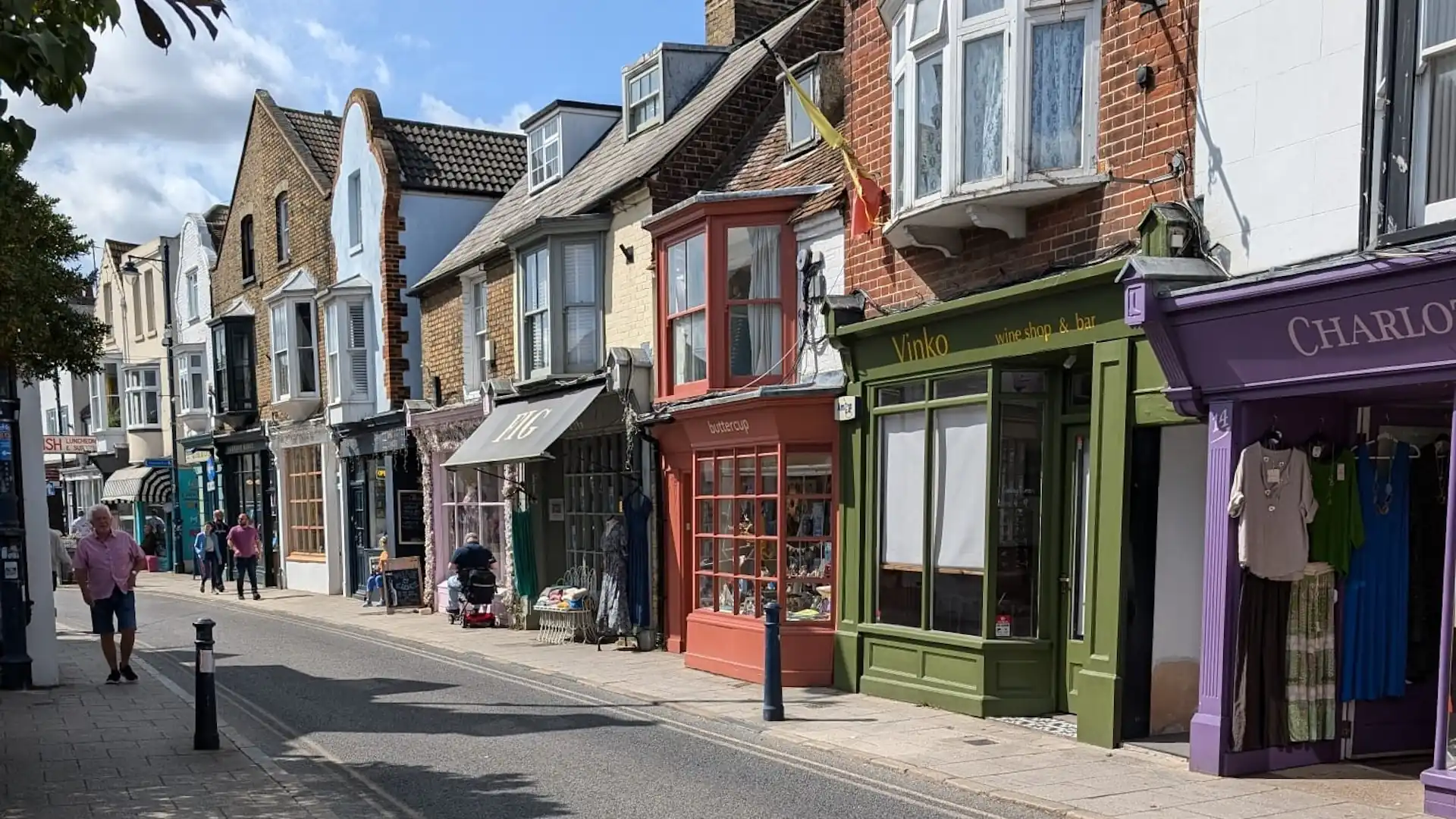
The retail along Harbour Street and the surrounding roads has maintained a high proportion of independents for a town this size. Clothing, craft, jewellery, ceramics, homeware — the range is broader than the seafront-souvenir cliché suggests.
Part of the reason this has held is rent. Whitstable's commercial rents, while no longer the bargain they were fifteen years ago, haven't reached the levels that have pushed out independents in some other Kent towns. That could change. It hasn't yet.
The result is a high street people make a point of coming to — not just to eat by the beach, but to actually shop. That's unusual, and it's worth protecting.
Where to Stay
Overnight stays in Whitstable are well-served by independent B&Bs and self-catering cottages, both in town and in the immediate surrounding area — Tankerton, Seasalter, the villages just inland. The accommodation is mostly owner-run, often in interesting buildings (many of the oldest properties in Whitstable are unusual little weatherboard cottages), and frequently with recommendations for eating and drinking that come from people who actually live here.
The chain hotel presence in Whitstable is minimal, which tells you something about the character of the place. It's not really built for people who want the same thing everywhere they go.
The Risk Worth Knowing About
The same qualities that make Whitstable worth visiting make it expensive to operate in. Desirability drives rents; rising rents favour chains that can carry higher costs; chains follow chains. This is the pattern that has hollowed out other coastal towns, and Whitstable is not immune to it.
Several independent businesses that were part of the town's character five years ago have closed or moved on. Others have opened. The balance, for now, still tilts towards independent — but it's not a permanent condition.
Which shops people stop in, which cafés they sit in, which B&Bs they book rather than whatever the algorithm puts first — it adds up over years. Whitstable's independent scene exists in its current form because enough people have made those choices. Worth bearing in mind next time you're deciding where to eat lunch.