Ramsgate has the only Royal Harbour in England, lower rents than Margate, and a growing independent food and drink scene that's been quietly building for several years. Here's what's there and why it matters.
Ramsgate gets less attention than Margate and less affection than Broadstairs, which means it tends to be underestimated. The town has the only Royal Harbour in England, a substantial Victorian seafront, and a growing independent scene that's benefited directly from lower rents than its more fashionable neighbours. If you're looking for somewhere in Thanet that hasn't been fully discovered yet, Ramsgate is the answer.
The Royal Harbour
The designation matters. Ramsgate received its Royal status after George IV departed from the harbour in 1821 — a largely ceremonial distinction now, but one that underpins the town's physical identity. The harbour is large, working, and properly maritime in a way that the more leisure-focused harbours at Whitstable and Broadstairs are not. Fishing boats, cross-channel ferries, yachts, and the occasional tall ship use it year-round.
The harbour arm and the streets immediately above it have become the focus for Ramsgate's independent food and drink scene. The combination of the seafront setting and more affordable rents has attracted independent restaurants, cafés, and bars that might not survive in Margate or Broadstairs. Several have been there long enough to have established reputations of their own.
The Independent Food Scene
The restaurants around the harbour are where Ramsgate is at its best. Several do serious food — properly sourced, seasonally adjusted, cooked with care — at prices that reflect the rent structure rather than a premium location surcharge. This makes Ramsgate one of the better-value places to eat well in Thanet.
The café culture is developing. Independent coffee shops have arrived in numbers over the past few years, several working with good roasters and taking the coffee seriously. The seafront location is, by any standard, an excellent place to drink coffee — the view across the harbour and out to the open sea is hard to improve on.
The Belgian Quarter
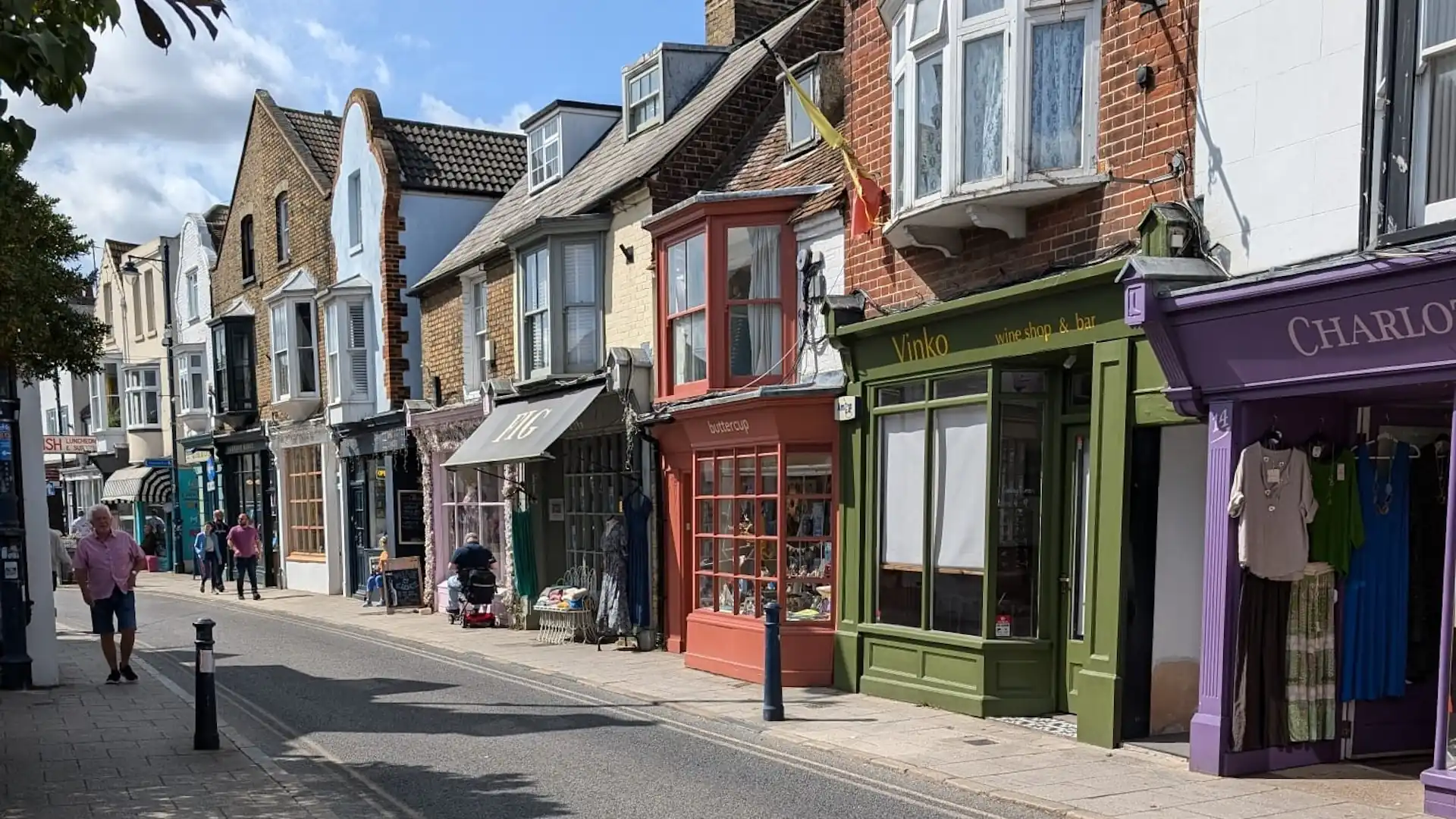
The streets of the town centre — particularly around the eastern side — retain a distinctive character. Ramsgate had significant connections with Flemish and Belgian merchants from the medieval period, and the architecture in some parts of the town reflects this. The area has been slower to develop than the harbour front but has independent businesses worth finding if you're exploring beyond the obvious seafront circuit.
What's Changing
The pattern is a familiar one: lower rents attracted new businesses, those businesses attracted an audience, and the audience has brought more businesses. The town hasn't yet reached the point where rents have been pushed up by its own success — that's what happened to parts of Margate's Old Town — which means there's still room for new businesses to open without immediately facing rents that price them out.
The risk, as in Margate, is that success prices out the kinds of businesses that made it worth visiting in the first place. For now, the balance holds. Independent restaurants, coffee shops, and food businesses are operating at a price point that reflects the town's actual costs rather than a premium charge for being somewhere fashionable.
Getting There
Ramsgate has direct rail connections to London via both the high-speed HS1 service (Ramsgate to London St Pancras) and the slower South Eastern service. Journey times vary significantly: the high-speed route takes around 90 minutes; the slower service takes longer. The station is a short walk from both the town centre and the harbour.
From Margate, Ramsgate is about 20 minutes by train or a similar drive. The two towns are close enough that a day visit can include both if you're based on the Thanet coast.
CT Local lists Ramsgate's independent businesses with type filters and opening hours — worth checking in advance, particularly for the newer arrivals around the harbour whose hours can vary seasonally.