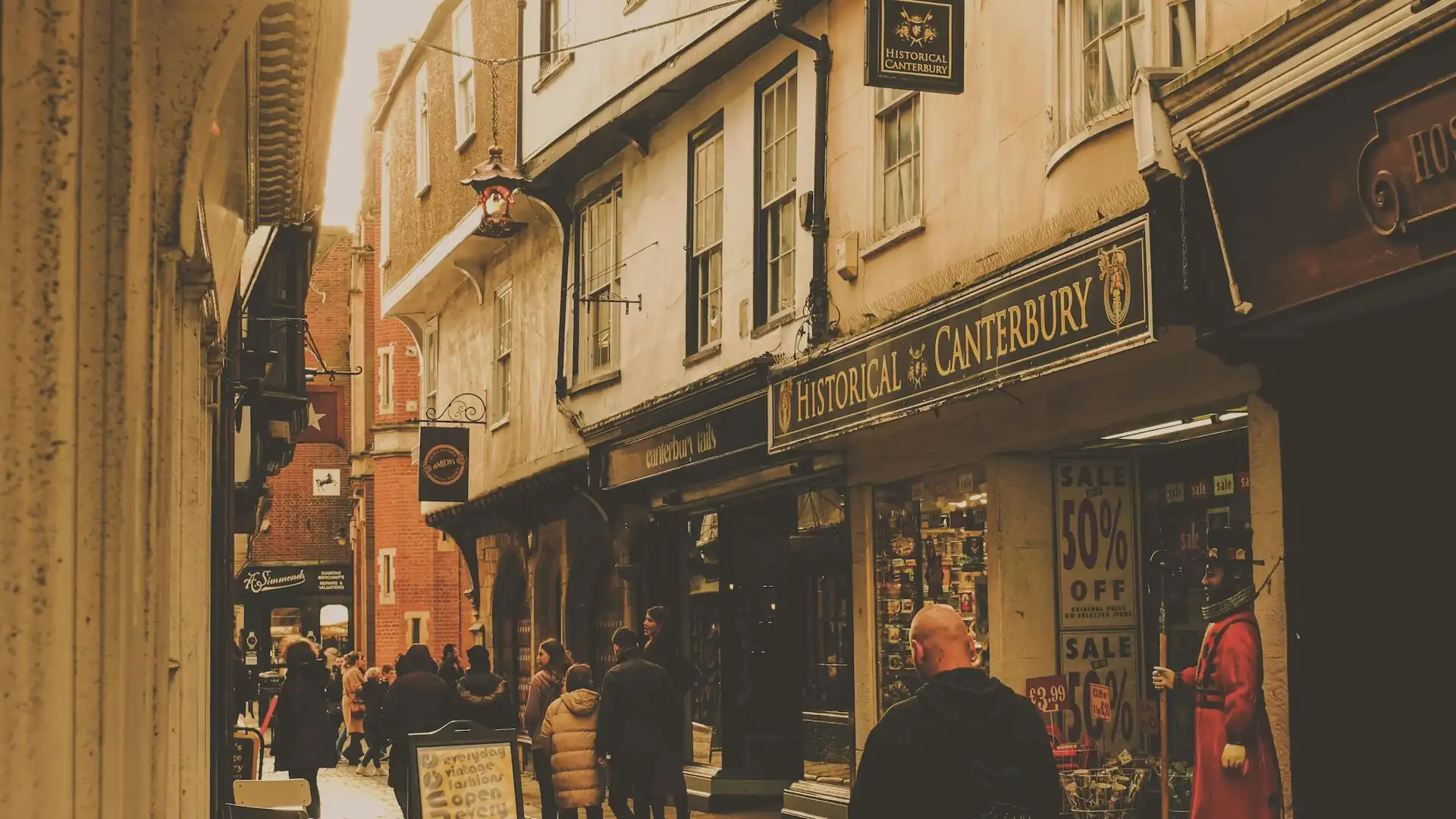
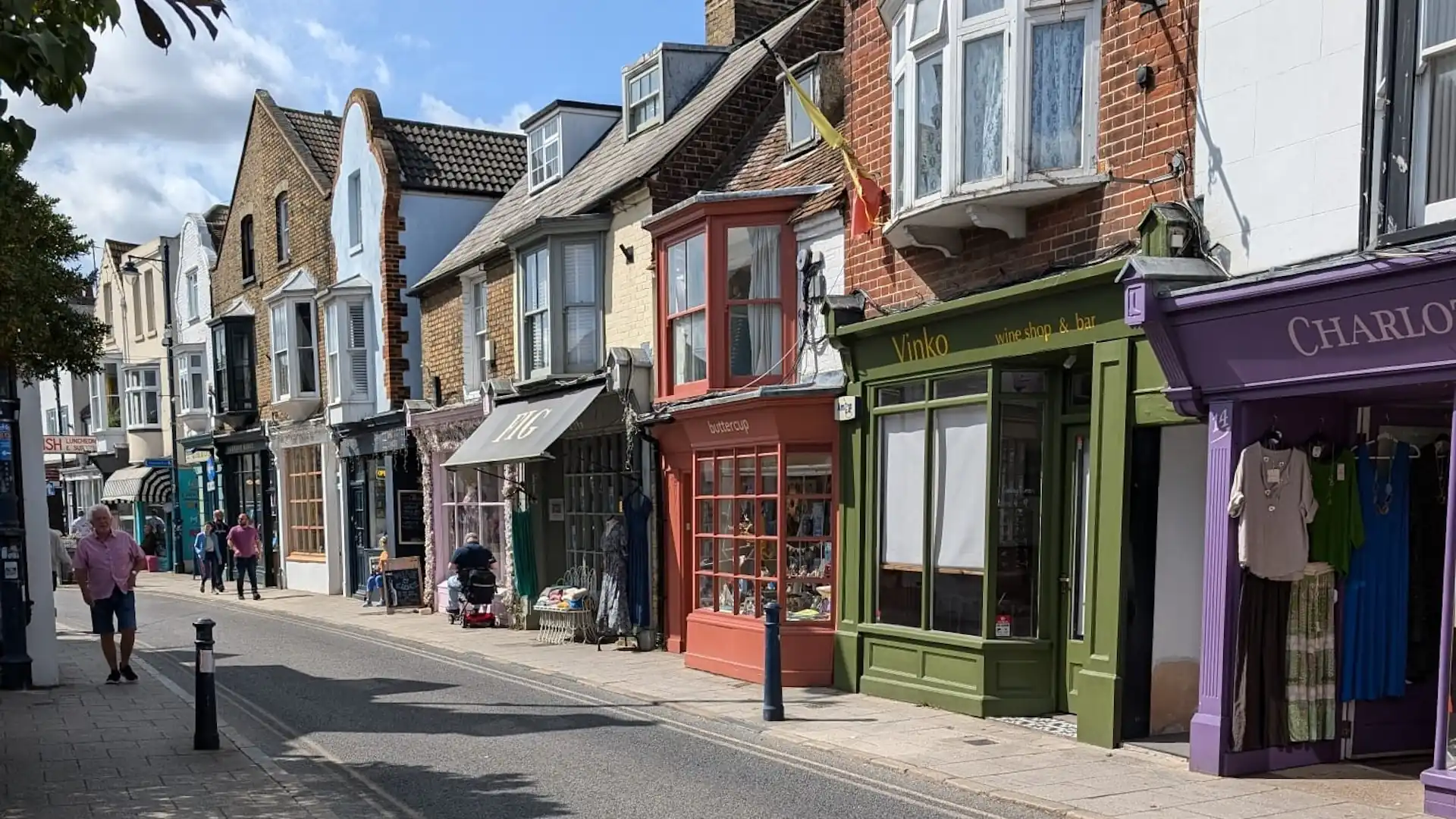
Deal is one of the few British towns that has successfully maintained a genuinely independent high street for decades. Here's what makes it work, what you'll find there, and why it matters.
You can walk the length of Deal's high street without encountering a single chain coffee shop. In 2026, this is unusual enough to be worth noting — most British towns of Deal's size have at least two or three. Deal has none. The explanation is interesting, and understanding it tells you something about what makes the town worth visiting.
Why It Stayed This Way
Deal is a medieval town built on a narrow grid running back from the shingle beach. The architecture is largely Georgian and earlier — buildings that were designed for small-scale trading and have stayed that way. The street widths and unit sizes don't suit the kind of footprint that most chains require: you can't fit a Costa or a Greggs formula into a Georgian shopfront without extensive and expensive structural work.
That's the physical explanation. The social one matters too. Deal's community has been actively protective of its town centre character for decades — through local planning decisions, through the choices of landlords who've prioritised independent tenants, and through the spending habits of residents who shop locally by default rather than by ideology.
The combination of inconvenient buildings and a protective community has produced a high street that's largely immune to the chain coffee shop model, not through any single decision but through accumulated circumstance and habit.
The Food and Drink Scene
The independent coffee shops in Deal are genuinely good — not just good by small-town standards, but worth making a journey for. Several work with quality roasters. The food offer is properly considered: local bakeries, seasonal menus, breakfasts that use ingredients from named suppliers rather than a central distribution contract.
The pubs in Deal are old and locally run. Several have been in the same hands, or versions of the same hands, for generations. They're not aspirationally rustic — they're just pubs that have been pubs for a long time and show it. Dog-friendly in most cases. Open at sensible hours.
The food shops stock things that don't appear in supermarkets: seasonal produce from local farms, particular cuts from local butchers, bread from the town's own bakers. Deal is small enough that the supply chains are short and visible — you can see where the bread comes from, who's behind the counter, how long they've been there.
The Bookshop
Deal's independent bookshop is one of the better ones in Kent and worth calling out specifically. Well-stocked, genuinely curated, with a staff recommendation shelf that reflects actual reading rather than publisher promotion budgets. The kind of shop that stocks authors whose names you don't recognise next to authors you do, because someone working there thinks they belong on the same shelf.
Independent bookshops are among the more difficult independent businesses to sustain — high stock costs, thin margins, the ongoing competition from online retail at a discount. The ones that survive tend to do so by being genuinely good at what they do and by having a community that shows up for them. Deal's bookshop has both.
Market Day
The Thursday market on the seafront is long-established and draws producers from across the Sandwich Bay and Deal area — farms, food producers, craft businesses. It runs year-round, though the range varies seasonally. Get there in the morning for the best selection.
The market is a useful complement to the permanent high street offer: seasonal produce that doesn't appear in the shops, direct contact with producers, the kind of conversation about what you're buying that's unavailable in a supermarket. Combined with the town's food shops, a Thursday visit to Deal can be organised as a fairly comprehensive food shop without touching a chain or a supermarket.
Making a Day of It
Deal is best visited with time rather than efficiency. The town is compact enough to cover on foot but interesting enough to slow down in. The seafront walk is good at any time of year — quieter than Whitstable or Broadstairs, with the distinctive shingle beach and the view north towards Ramsgate and south towards Dover.
If you're timing a visit, Thursday gives you the market. Weekends are busier but most things are open. The independent pubs in Deal tend to stay open through the afternoon, which not all CT towns' independents do.
The CT Local directory lists Deal's independent businesses with filtering by type, values, and opening hours. Worth a look before you visit to work out what you want to prioritise — the town rewards planning and rewards wandering in roughly equal measure.