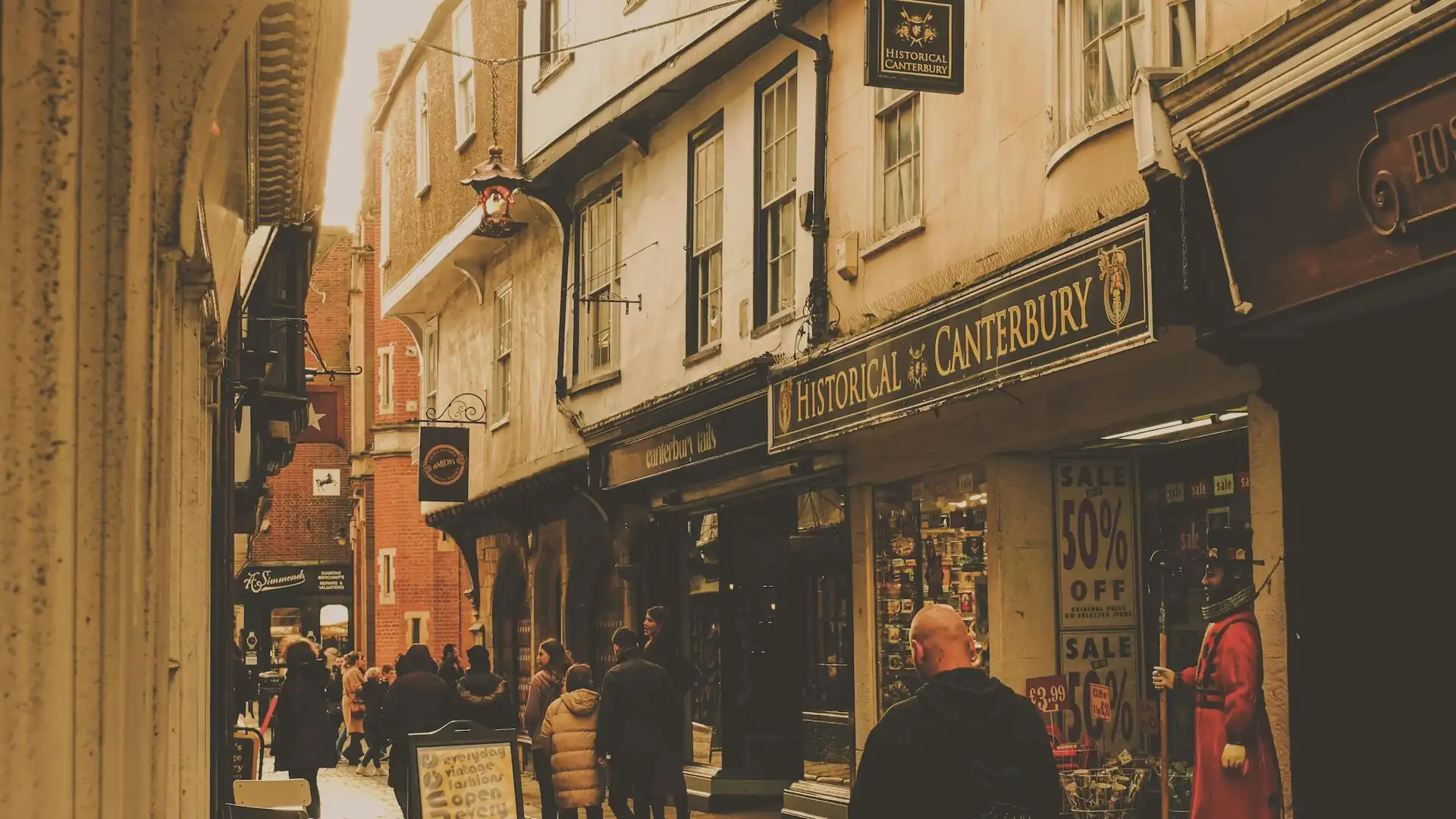
Behind Canterbury's cathedral-and-tourism reputation is a working community of independent makers — ceramicists, textile workers, printmakers — producing things in studios across the city. Here's what's there and how to find the ones making with genuine environmental consideration.
Ask someone what Canterbury is known for and they'll tell you about the Cathedral. They won't mention the ceramicists, the printmakers, the textile workers, and the woodworkers operating out of studios and converted spaces across the city. That's partly because Canterbury has been successfully selling itself as a heritage destination for so long that everything else tends to disappear behind the brochure version.
There's a lot behind the brochure version.
Why It's Here
Studio space in Canterbury is considerably cheaper than in London and more available than in Whitstable, which has become expensive enough that new makers struggle to get a foothold. Canterbury also has two universities — Kent and Canterbury Christ Church — that send design and fine art graduates into the city each year, and some of them stay. Not because they planned to, but because the rents were manageable, the city was liveable, and there was enough of a community to make staying feel like something other than compromise.
The result is a maker community that's been building quietly for years, not by design or civic investment, but through individual decisions that have accumulated into something real. Most of the studios are off the main visitor routes. Several operate by appointment or sell through galleries rather than keeping shop hours. You have to look for them.
Handmade Isn't the Same as Sustainable
Worth being clear about this before going any further: making something by hand doesn't automatically make it worth buying on environmental grounds. An object made by hand from unsustainable materials isn't obviously better than something factory-made from recycled content. The Canterbury makers worth seeking out specifically for their sustainability credentials are the ones who've made deliberate decisions about materials — not just the ones who work by hand.
The giveaway is usually in how they describe the work. A ceramicist who can tell you which British clay they're using and why. A textile maker who'll explain the fibre and the dye process without needing to be asked. A woodworker who takes commissions because a commissioned piece is designed to be kept and repaired rather than replaced in three years. These aren't points on a marketing checklist. They show up in the conversation and in the price.
The Galleries
Several Canterbury galleries exist specifically to get locally made work in front of people who'd buy it — not just to exhibit it. The ones that have been doing this for years have worked out what they're showing and why. The standard tends to be higher than at a general craft fair, and the curation means you're not spending half your time sorting through work that isn't up to much.
Some of the makers also sell directly from studios, which is a different experience. Seeing a piece being made, or at least seeing where it's made, before you decide whether to buy it — that's not something you can replicate on a website or at a market stall.
The Markets
Canterbury has a few craft and maker markets through the year. The November and December ones are the biggest and carry the widest range. A couple of smaller, more curated markets run in summer, often in the Cathedral precincts or the Dane John Gardens.
For smaller makers who don't run a permanent shop, the markets are how they sell. Some of the most interesting people don't have a web presence worth speaking of — they make things, turn up at the right markets, sell out, and go home. If you're looking for that sort of maker specifically, the market calendar and the CT Local directory together give a fuller picture than either on its own.
One Useful Test
When you're talking to a maker at a market or a studio, ask them where their materials came from. Not as a gotcha — just as a genuine question. The ones who've thought about it will tell you clearly and without hesitation. The ones who haven't will give you a vague answer about quality and craftsmanship that doesn't quite answer what you asked. That distinction, more than any badge or certificate, is how you tell them apart.
The CT Local directory lists independent makers and craft businesses in Canterbury with filtering by type. Several have additional detail on their pages about materials and sourcing that's worth reading before you visit.